Gel polish quality problems can affect application smoothness, color consistency, curing performance, adhesion, and long-term wear. These defects can lead to customer complaints, product returns, and damage to brand reputation. Proper formula development, raw material inspection, controlled manufacturing processes, and comprehensive quality testing can reduce most problems.
A Fabricante profesional de esmaltes en gel should not only identify defects but also implement preventive measures throughout production to ensure consistent performance across batches.YouGel is a leading fabricante de esmalte de uñas de gel in China that continuously innovates to deliver high-quality, trend-driven products at competitive prices.
What Are the Most Common Gel Polish Quality Problems?
Gel polish is a formulated cosmetic product containing resins, pigments, photoinitiators, and functional additives. The interaction between these ingredients determines its application properties, curing behavior, adhesion, and durability.
When raw materials, formulation ratios, or production conditions are not properly controlled, several quality problems may occur.
1. Color Inconsistency
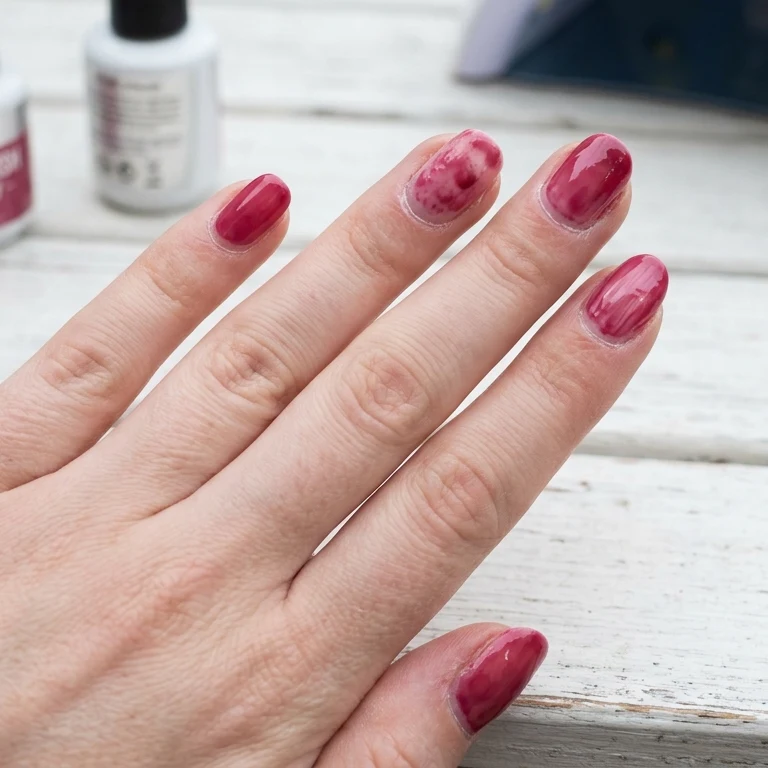
Color inconsistency occurs when the same gel polish shade looks different between bottles or production batches. For professional nail brands, even small color variations can affect collection consistency and customer expectations.
Common causes include:
- Inaccurate pigment ratios during formulation.
- Insufficient pigment dispersion during mixing.
- Variations in raw material quality between batches.
- Inconsistent production parameters.
- Differences in sample preparation and color evaluation.
How manufacturers prevent it:
Manufacturers should establish standardized color formulations and maintain approved reference samples for each shade. Precise weighing, controlled pigment dispersion, and consistent mixing procedures help reduce variations.
Colorimeters and visual inspections under standardized lighting conditions can also help manufacturers compare production batches against approved color references.
2. Poor Adhesion, Peeling, and Lifting
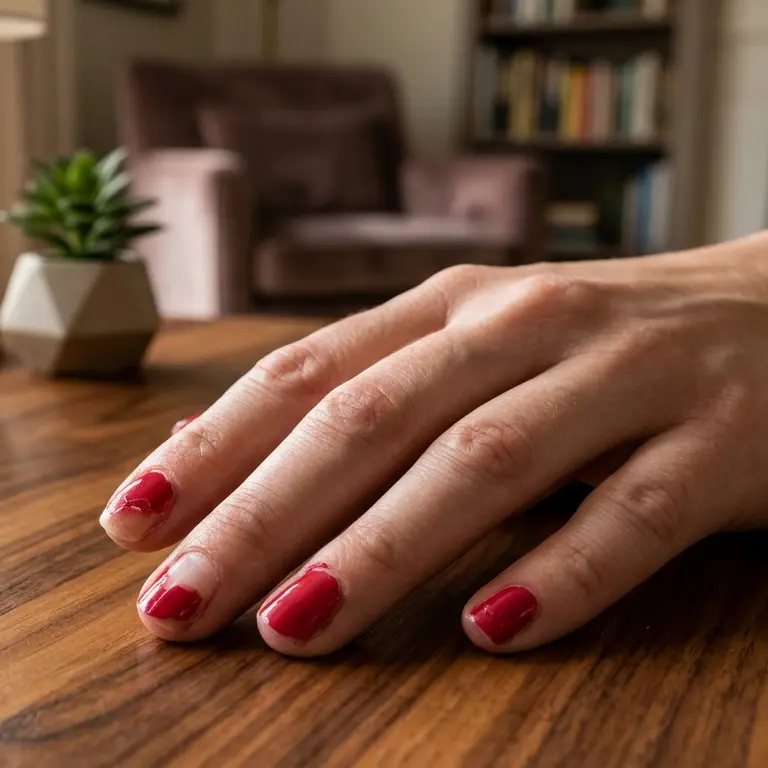
Poor adhesion is one of the most frustrating gel polish quality problems for professional nail technicians and salon customers. It may cause the coating to lift from the natural nail, peel around the edges, or detach prematurely.
Possible causes include:
- Incompatible or poorly balanced formulation components.
- Insufficient curing.
- Inappropriate base coat compatibility.
- Excessive product thickness.
- Improper nail preparation or application techniques.
How manufacturers prevent it:
Manufacturers should optimize resin systems and formulation compatibility to support reliable adhesion. Performance testing should evaluate how the product behaves when used with its recommended base coat and curing conditions.
However, peeling and lifting are not always manufacturing defects. Nail surface preparation, application thickness, natural nail condition, and curing equipment can also influence the results.
Providing clear application instructions and recommended product combinations helps reduce performance-related complaints.
3. Bubbles and Uneven Texture
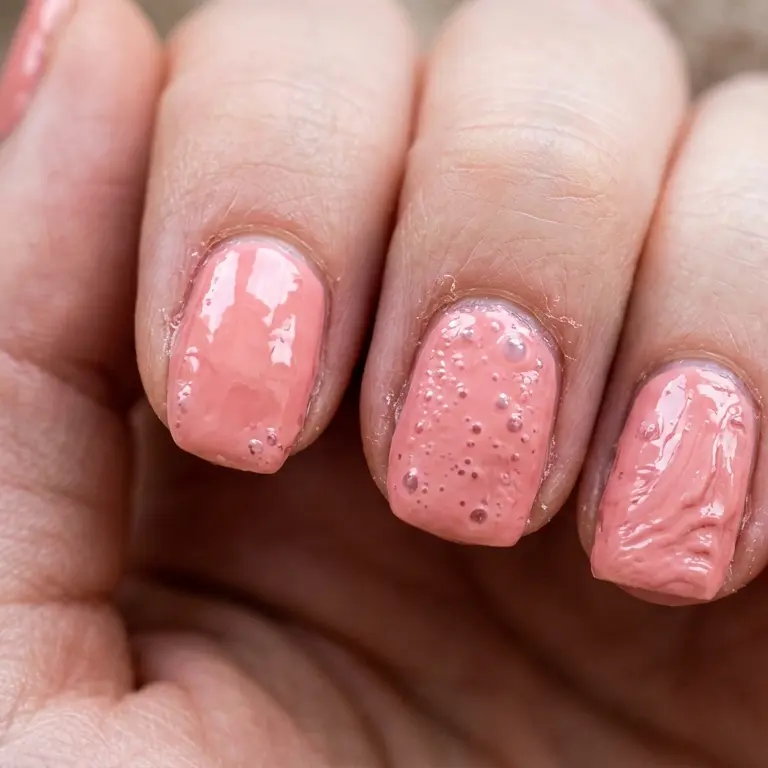
Bubbles, small particles, or an uneven texture can make gel polish difficult to apply and create an unattractive finish.
These problems may occur because of:
- Air trapped during mixing.
- Insufficient defoaming.
- Incomplete pigment dispersion.
- Contamination from equipment or the production environment.
- Improper storage or handling.
How manufacturers prevent it:
Manufacturers can use controlled mixing procedures and appropriate vacuum defoaming processes to reduce trapped air. Production equipment should also be cleaned regularly to prevent cross-contamination.
Filtration, visual inspection, and controlled filling procedures help ensure that the finished product has a smooth and uniform texture.
4. Uneven Viscosity
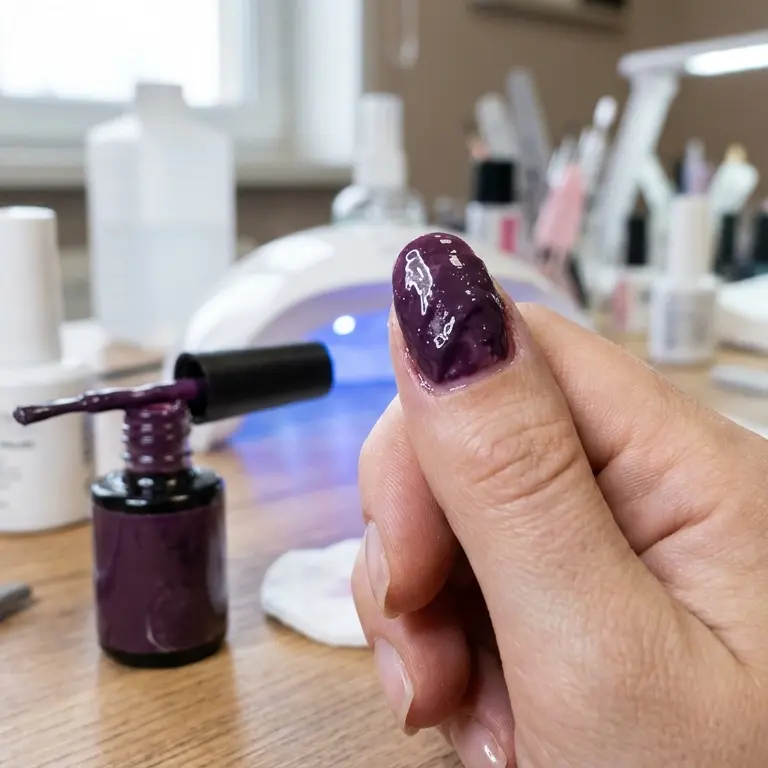
Viscosity determines how gel polish flows, spreads, and levels on the nail. If the consistency is too thick, technicians may struggle to apply thin, even coats. If it is too thin, the product may flow into the cuticle area or become difficult to control.
Common causes include:
- Incorrect ingredient proportions.
- Inconsistent mixing conditions.
- Variations in raw material properties.
- Temperature fluctuations.
- Formula instability during storage.
How manufacturers prevent it:
Manufacturers should establish viscosity specifications for each product category and test samples during production.
Using a viscometer helps verify whether the product meets its target consistency. Temperature-controlled production and standardized formulation procedures also support more consistent results.
5. Poor Curing Performance
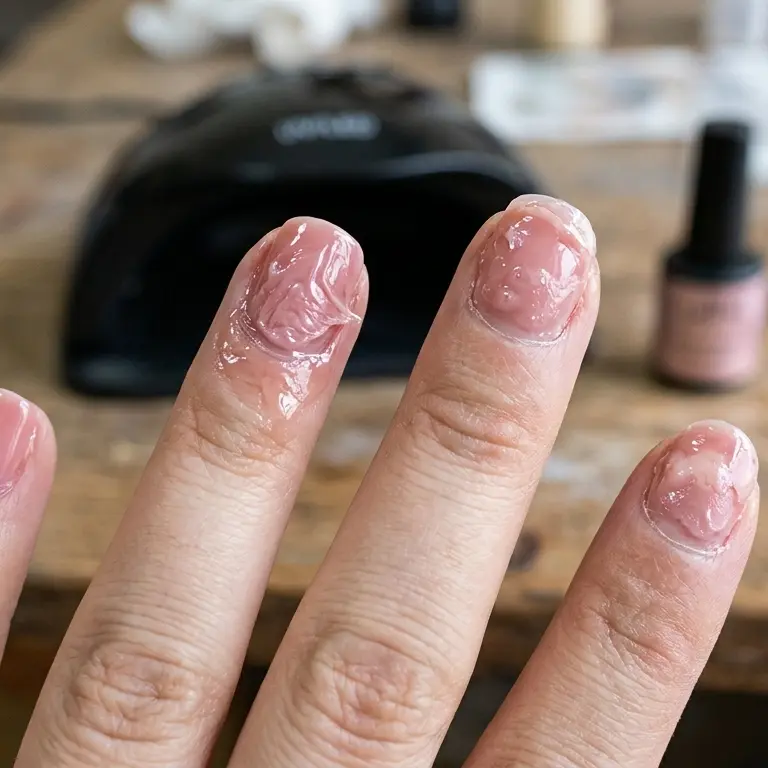
Poor curing performance occurs when gel polish does not properly polymerize under the recommended UV or LED lamp. Signs may include a persistently soft coating, wrinkling, poor durability, or incomplete curing beneath the surface.
Potential causes include:
- An unsuitable photoinitiator system.
- Incompatibility between the formula and lamp wavelength.
- Excessive pigment concentration affecting light penetration.
- Applying coats that are too thick.
- Incorrect curing time or unsuitable lamp equipment.
How manufacturers prevent it:
Manufacturers should evaluate the compatibility between the formulation and recommended UV/LED curing equipment.
Curing tests should consider different shades, especially highly pigmented and darker colors, because their light transmission characteristics may differ.
Clear product instructions should specify suitable lamp types, curing times, and recommended application thicknesses. Users should also avoid applying excessively thick layers.
Proper curing is important not only for product performance but also for reducing the risk of exposure to residual uncured ingredients.
6. Pigment Separation and Product Instability
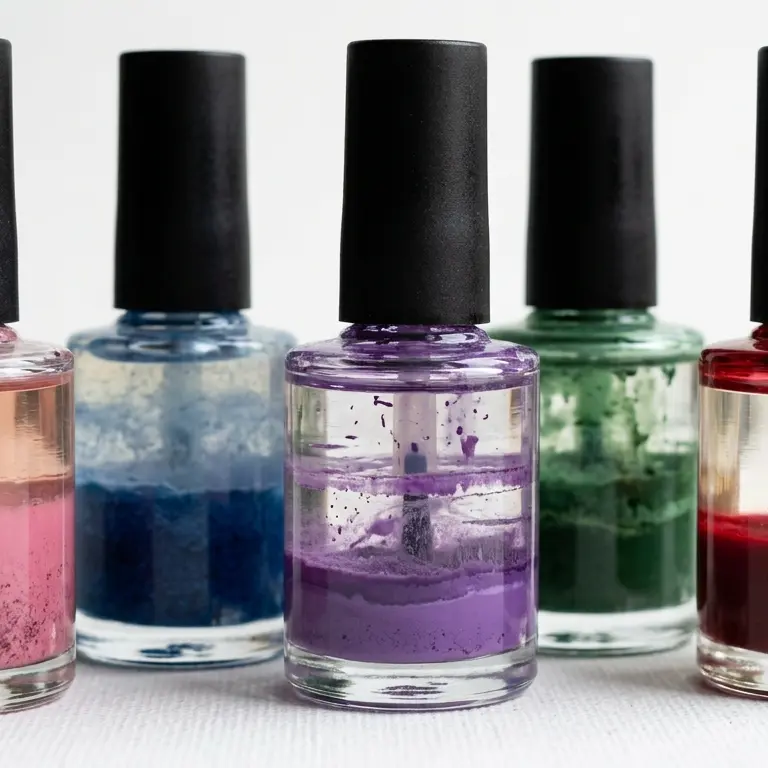
Pigment separation occurs when color particles settle or become unevenly distributed within the gel polish. Some settling may be normal depending on the formulation, but excessive separation or poor redispersion can indicate a stability problem.
Common causes include:
- Inadequate pigment dispersion.
- Insufficient formulation stability.
- Incompatible ingredients.
- Improper storage conditions.
- Long-term exposure to unsuitable temperatures.
How manufacturers prevent it:
Manufacturers should optimize pigment dispersion and evaluate the compatibility of formulation components.
Stability testing under appropriate storage conditions helps identify changes in appearance, viscosity, and product performance over time.
Clear storage recommendations, such as avoiding excessive heat and direct sunlight, also help maintain product quality during distribution and storage.
7. Contamination and Foreign Particles
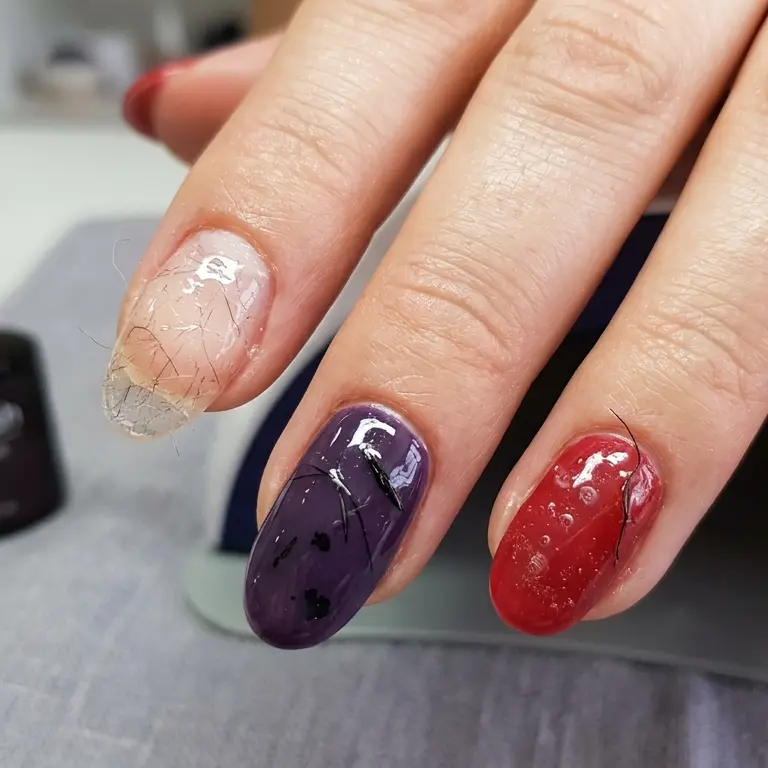
Foreign particles, dust, or other visible impurities can affect the appearance and quality of gel polish.
Contamination may occur through:
- Unclean production equipment.
- Poor handling of raw materials.
- Inadequate environmental controls.
- Improperly maintained filling equipment.
- Damaged or poorly sealed packaging.
How manufacturers prevent it:
A controlled production environment, equipment cleaning procedures, raw material inspection, and appropriate filtration help reduce contamination risks.
Manufacturers should also inspect bottles, caps, brushes, and finished products before shipment to ensure that packaging and product appearance meet agreed specifications.
What Causes Gel Polish Quality Problems?
Although individual defects may look different, most gel polish quality problems can be traced to several underlying manufacturing factors.
1. Inconsistent Raw Material Quality
Gel polish performance depends heavily on the quality of its raw materials, including resins, pigments, photoinitiators, and additives.
Variations in ingredient purity or performance can influence color, viscosity, curing behavior, and stability.
Professional manufacturers should establish supplier evaluation procedures and inspect incoming materials before production begins.
2. Improper Formula Development
A gel polish formula requires a careful balance of ingredients. Changing one component may influence several product characteristics simultaneously.
For example, modifying pigment concentration can affect color coverage, viscosity, and curing performance.
Professional R&D teams need to evaluate ingredient compatibility and conduct repeated performance testing before approving a formula for mass production.
3. Uncontrolled Manufacturing Processes
Even a well-developed formula can produce inconsistent results when manufacturing conditions are not standardized.
Inaccurate weighing, insufficient mixing, poor temperature management, and inconsistent filling procedures may introduce variations between production batches.
Standard operating procedures and in-process quality inspections help reduce these risks.
4. Inadequate Storage and Packaging
Gel polish may experience changes in appearance or performance when exposed to unsuitable storage conditions.
Light exposure, excessive heat, damaged seals, and incompatible packaging materials can affect product stability.
Manufacturers should evaluate packaging compatibility and provide appropriate storage and transportation recommendations.
5. Insufficient Quality Testing
Relying only on visual inspection is not enough to evaluate gel polish quality.
A product may look attractive in the bottle but still have problems with adhesion, curing, viscosity, or long-term stability.
A comprehensive testing program should assess both appearance and functional performance before products are approved for shipment.
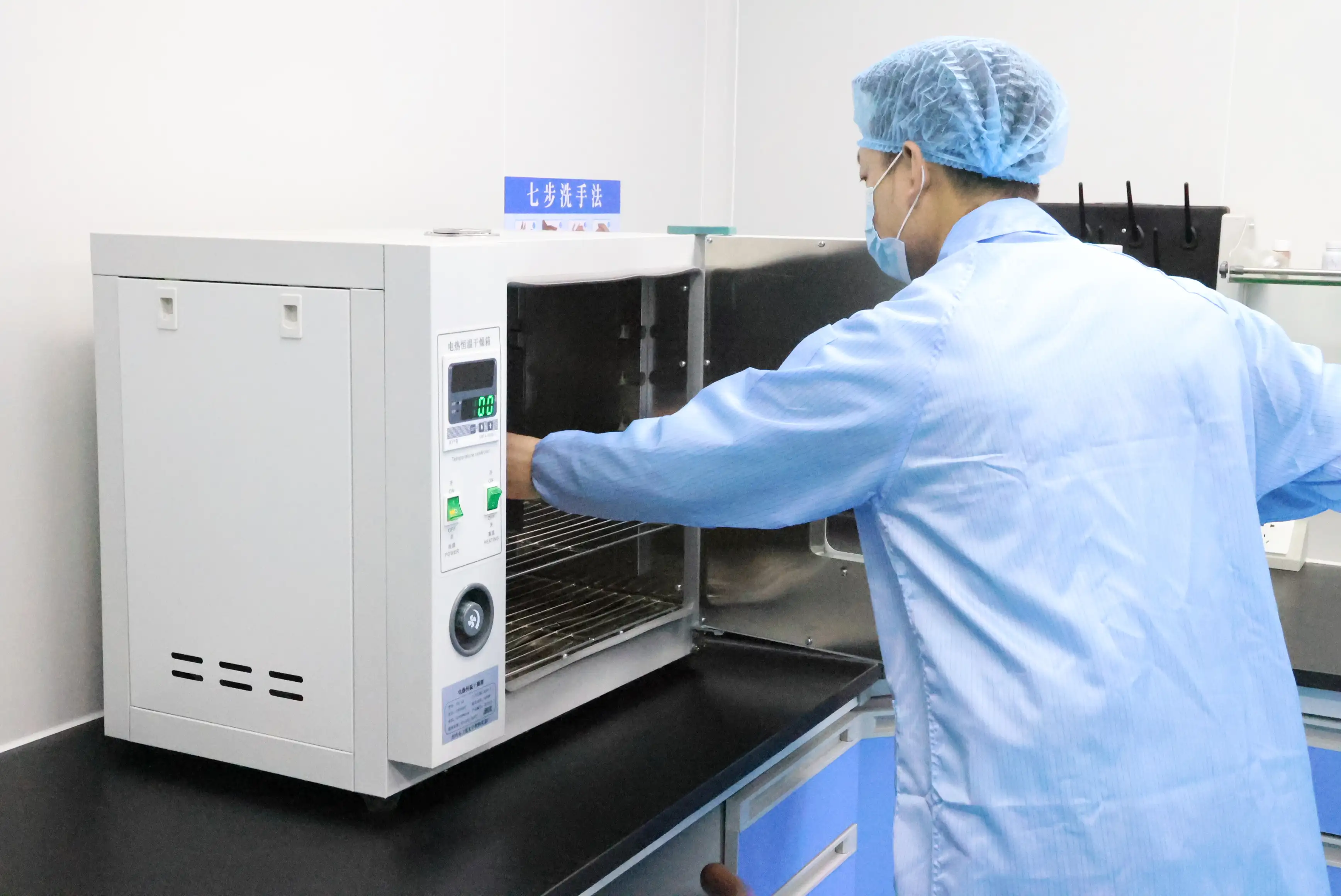
How Do Manufacturers Prevent Gel Polish Quality Problems?
Preventing defects requires a systematic quality management process rather than relying on final inspection alone. Professional manufacturers should implement quality controls throughout the entire production cycle.
1. Strict Raw Material Inspection
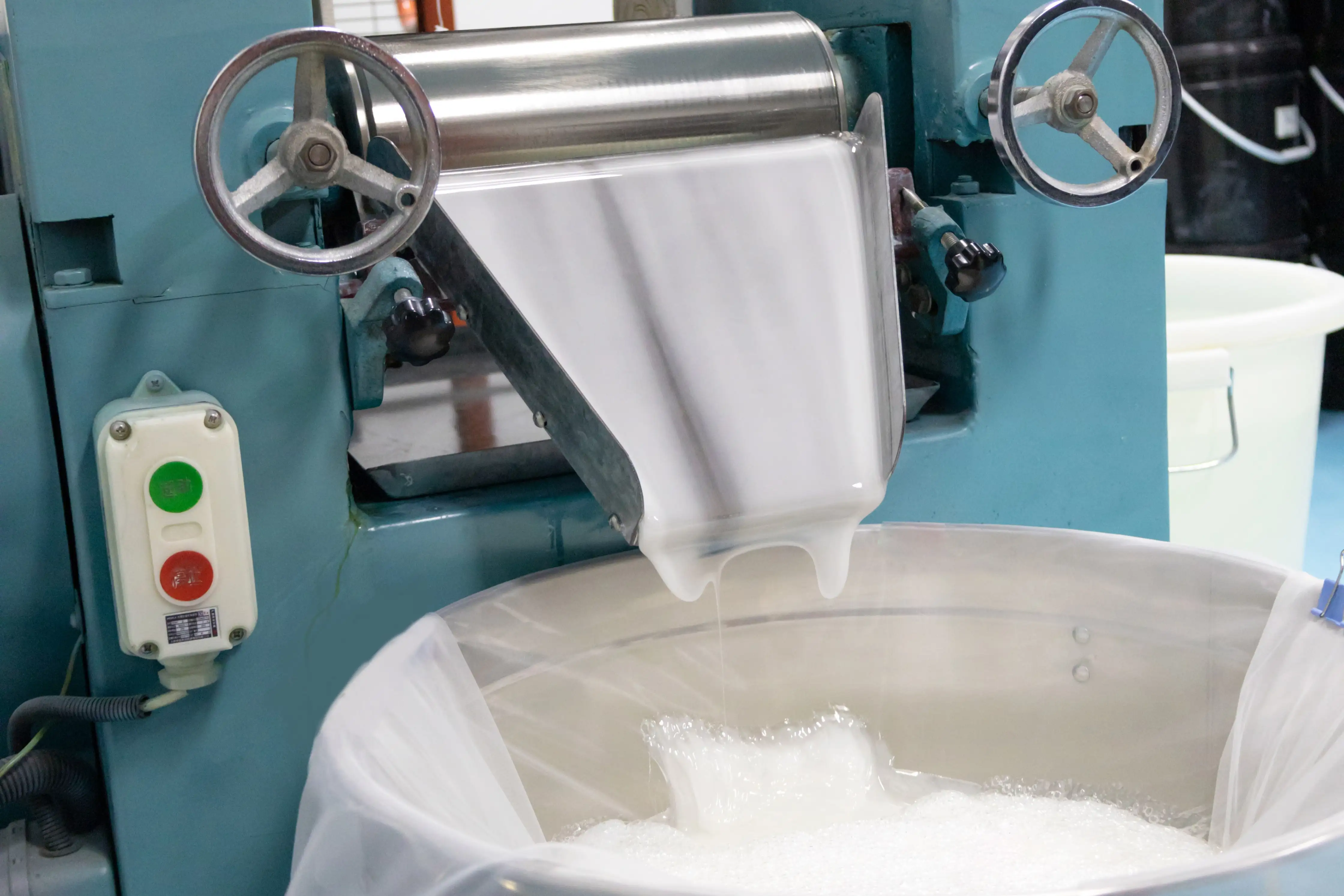
Quality control starts before manufacturing.
Incoming materials should be checked for specifications, appearance, purity, safety documentation, and compatibility with the approved formulation.
Manufacturers should also maintain supplier records and traceability information to help identify the source of potential quality issues.
2. Precise Formula and Pigment Control
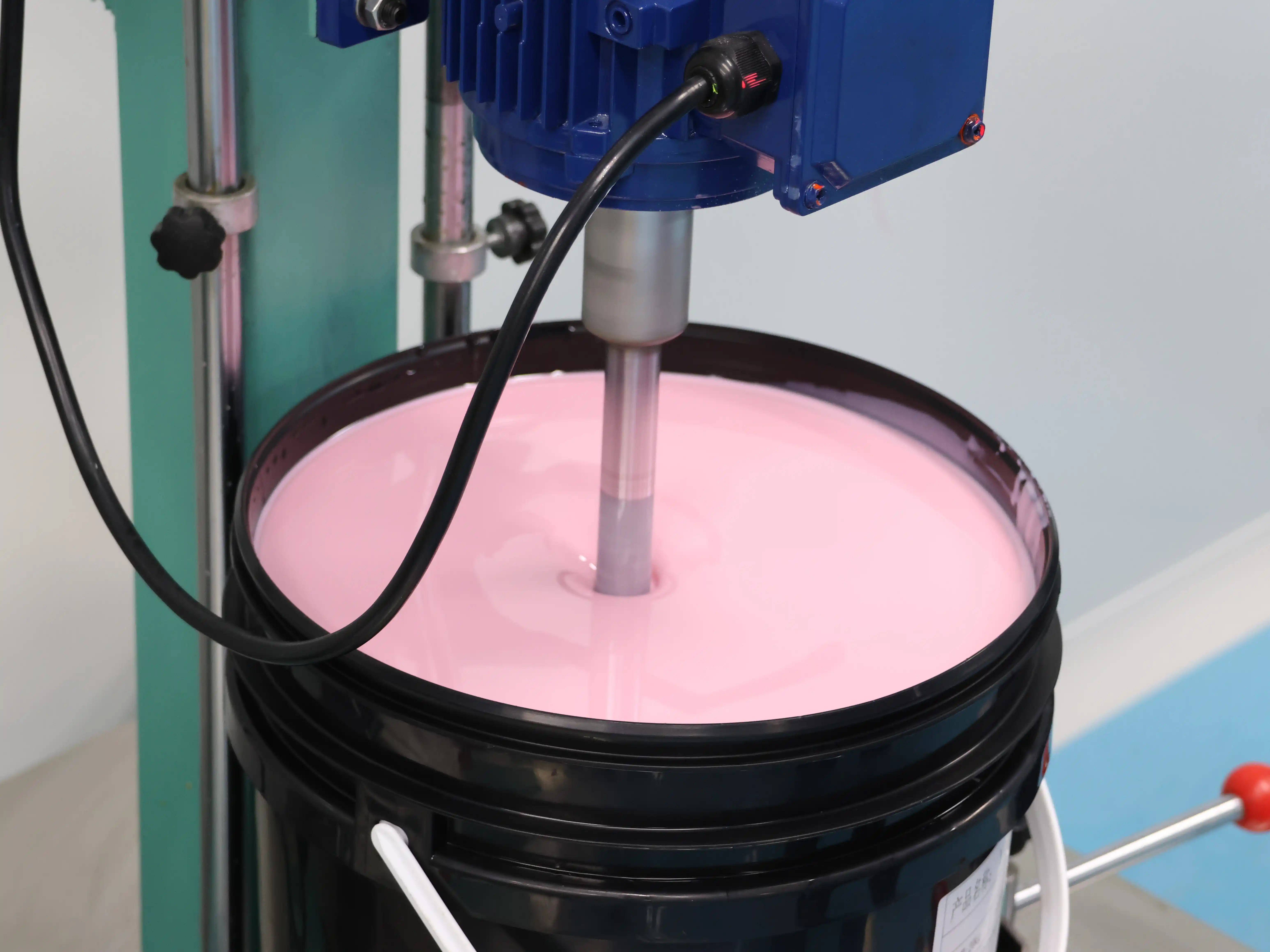
Accurate ingredient weighing and standardized formulation procedures are essential for consistent product performance.
For color gel polish, manufacturers should establish approved pigment ratios and reference samples.
For customized collections, color matching should be completed before mass production to reduce the risk of shade differences between samples and finished orders.
3. Standardized Mixing and Defoaming Processes
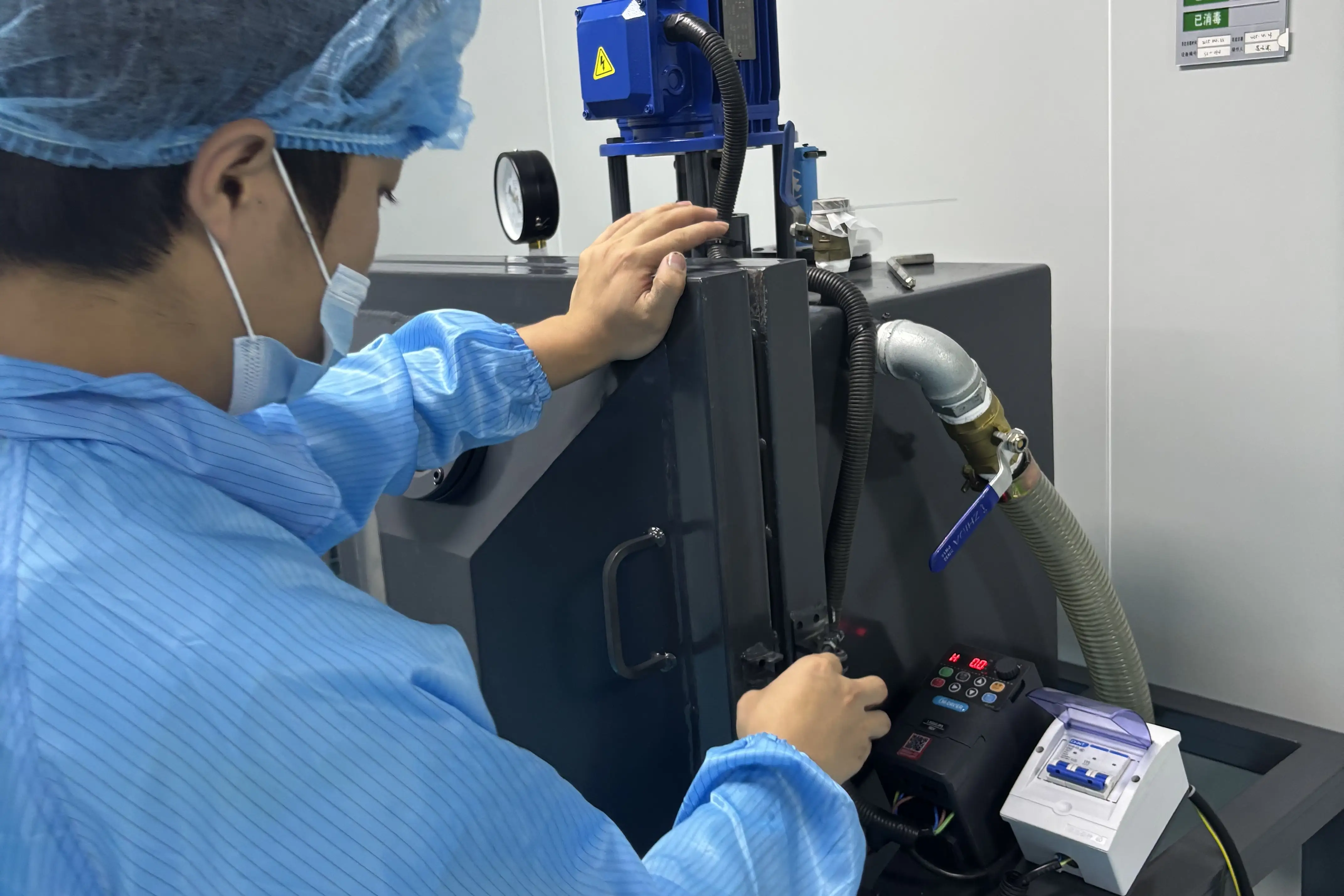
Mixing parameters, equipment conditions, and production procedures should be standardized for each product type.
Appropriate dispersion and defoaming processes help create a uniform texture and reduce the presence of trapped air.
Regular equipment maintenance and cleaning also help minimize contamination risks.
4. In-Process Quality Monitoring

Quality inspection should continue during manufacturing rather than being postponed until the finished products are ready.
Important checkpoints include:
- Color consistency during mixing.
- Viscosity and texture.
- Product appearance.
- Filling accuracy.
- Curing performance.
Monitoring these factors allows manufacturers to identify deviations early and make necessary adjustments before large quantities are produced.
5. Finished Product Performance Testing

Before shipment, finished gel polish should undergo appropriate inspections and performance evaluations.
Depending on the product type, testing may include:
| Quality Test | What It Evaluates |
|---|---|
| Color Testing | Shade accuracy and batch consistency |
| Viscosity Testing | Formula consistency and application behavior |
| Adhesion Testing | Bonding performance under specified conditions |
| Wear Resistance Testing | Resistance to chipping and premature deterioration |
| Gloss Testing | Surface shine and finish consistency |
| UV/LED Curing Testing | Polymerization under recommended curing conditions |
| Stability Testing | Changes in appearance and performance during storage |
| Packaging Inspection | Bottle sealing, labeling, and packaging integrity |
These procedures help manufacturers verify whether products meet established quality specifications.
How Can Buyers Evaluate Gel Polish Quality Before Bulk Orders?
For importers, wholesalers, distributors, and private-label brands, evaluating samples before placing large orders is one of the most effective ways to reduce procurement risks.
Here are five important checks buyers should perform.
Check Color Consistency and Coverage
Compare the supplied sample with the approved color reference.
Evaluate whether the shade looks consistent under standardized lighting and whether the product provides suitable coverage in the recommended number of coats.
For large collections, test multiple shades rather than relying on a single sample.
Test Adhesion and Wear Resistance
Apply the gel polish according to the manufacturer’s instructions and observe its performance over the recommended wear period.
Check for premature lifting, peeling, chipping, and changes in appearance.
Use the same base coat, top coat, application method, and curing conditions when comparing different suppliers.
Verify UV/LED Curing Performance
Confirm that the product cures properly under the recommended lamp conditions.
Test different colors separately, particularly darker and highly pigmented shades.
Do not evaluate curing based on surface appearance alone. Follow the manufacturer’s recommended curing procedure and avoid handling or using incompletely cured products.
Review Product Stability and Shelf Life
Ask the manufacturer about stability testing, storage recommendations, and shelf-life specifications.
Check whether the sample shows unusual separation, changes in viscosity, leakage, or other visible changes during the agreed evaluation period.
Request Quality Documentation and Samples
A reliable supplier should be able to provide relevant product information and supporting documentation.
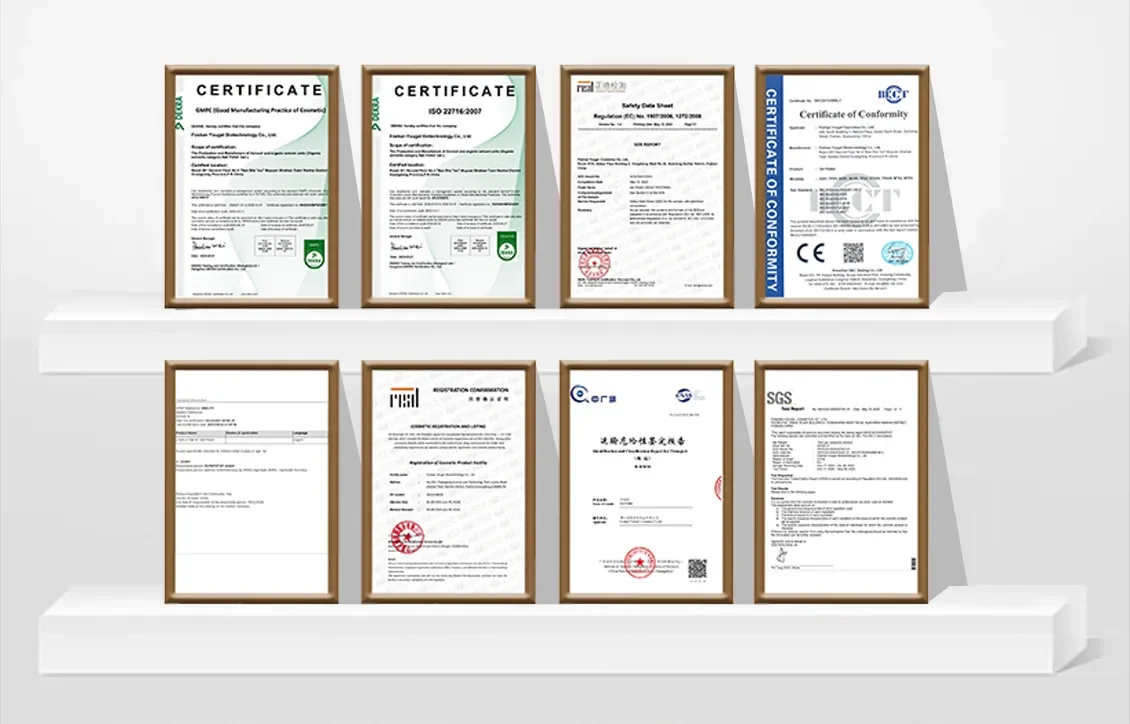
Depending on the target market and product requirements, buyers may request:
- Product ingredient information.
- Safety Data Sheets (SDS/MSDS).
- Relevant compliance documentation.
- Quality inspection records.
- Batch identification and traceability information.
- Product samples for independent evaluation.
Before mass production, buyers should also confirm product specifications, packaging requirements, color references, and acceptance criteria in writing.
Why Choose a Professional Gel Polish Manufacturer?
Choosing a fabricante especializado is about more than finding a supplier with competitive prices. It means establishing a partnership that supports consistent quality, product development, and long-term business growth.
Un fabricante con amplia experiencia should offer several important advantages.
Professional R&D and Formula Development
A dedicated R&D team can help develop different textures, colors, and functional formulas according to market requirements. This is especially important for brands planning to expand their product collections.
Consistent Manufacturing and Quality Control
Standardized production procedures, raw material inspection, in-process monitoring, and finished product testing help reduce batch-to-batch variations.
Flexible OEM/ODM Customization
Private-label brands may require custom colors, formulas, bottle designs, labels, and packaging. A capable OEM/ODM partner can support these requirements from product development to mass production.
Reliable Production and Supply Capacity
Stable manufacturing capacity and quality management are important for wholesalers and distributors who need consistent replenishment and long-term product availability.
Asociarse con YouGel for Reliable Gel Polish Manufacturing
Como Fabricante profesional de esmaltes de uñas en gel en China, YouGel provides OEM/ODM solutions for nail brands, distributors, wholesalers, and beauty businesses worldwide.
With more than 10,000 gel polish shades and a professional R&D team, we support customized product development to meet different market preferences and brand requirements.
Our product portfolio includes HEMA-free, TPO-free, Vegan, and Cruelty-free options. We also focus on manufacturing consistency through raw material inspection, in-process quality monitoring, color checks, and finished product performance testing.
Whether you are launching a new nail brand, expanding an existing collection, or sourcing gel polish for wholesale distribution, YouGel offers flexible customization and professional manufacturing support.
Preguntas frecuentes
1. What Are the Most Common Gel Polish Quality Problems?
Common gel polish quality problems include color inconsistency, poor adhesion, peeling, bubbles, uneven viscosity, and insufficient curing.
2. Why Does Gel Polish Peel or Lift?
Peeling and lifting may result from poor adhesion, incomplete curing, improper nail preparation, or unsuitable application thickness.
3. How Do Manufacturers Prevent Gel Polish Quality Problems?
Manufacturers use strict raw material inspection, precise formulation, controlled mixing, and finished product testing to ensure consistent quality.
4. How Can Buyers Check Gel Polish Quality Before Bulk Orders?
Buyers should test color consistency, viscosity, adhesion, curing performance, and wear resistance before approving bulk production.
5. How Do I Choose a Reliable Gel Polish Manufacturer?
Choose a manufacturer with professional R&D capabilities, standardized quality control, stable production capacity, and flexible OEM/ODM services.
Conclusión
Gel polish quality problems such as color inconsistency, poor adhesion, bubbles, uneven viscosity, and insufficient curing performance can affect product reliability and customer satisfaction. Most of these issues can be reduced through careful formula development, strict raw material inspection, standardized manufacturing procedures, and comprehensive product testing.
For buyers, evaluating samples, reviewing quality documentation, and checking batch consistency before bulk orders are essential steps in reducing procurement risks.
For manufacturers, quality assurance should cover every stage, from raw material selection to finished product inspection. By partnering with a professional gel polish manufacturer with strong R&D capabilities and systematic quality control, nail brands and distributors can build more reliable product collections and strengthen their competitiveness in the global beauty market.
Póngase en contacto con YouGel today to discuss your OEM/ODM requirements, request product samples, and develop gel polish collections that meet your market’s quality expectations.
-

Yougel Gel Nail Polish Colors for Fall, 15ml New Arrivals 36 Colors Gel Polish Factory
-
Venta al por mayor UV LED Gel Polish Factory, CE Certified Non-Toxic Formula | YOUGEL Nail Art Supply
-
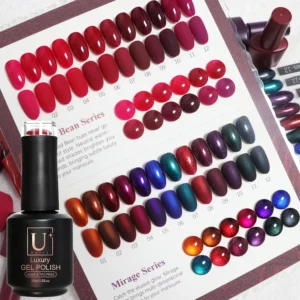
Fábrica de esmaltes de gel de lujo al por mayor, sin HEMA ni TPO: series «Red Bean» y «Mirage»
-
Fabricante mayorista de esmaltes de gel, proveedor de esmaltes de gel para uñas con 3000 colores nuevos.