When purchasing builder gel or nail extension gel in bulk, choosing a product based on appearance or price alone creates unnecessary quality risks. Professional nail salons, distributors, wholesalers, and private-label brands need formulas that deliver consistent strength, reliable adhesion, controlled application, and durable nail enhancements.
The most effective approach is to test samples against predefined performance criteria before approving a bulk order. By comparing viscosity, flexibility, crack resistance, self-leveling, adhesion, curing performance, and batch consistency under standardized conditions, buyers can make informed sourcing decisions.
Als Professioneller Hersteller von Gel-Nagellack in China, YouGel provides OEM/ODM services for international buyers, with more than 10,000 gel shades and product options that include HEMA-free, TPO-free, vegan, and cruelty-free formulations. This guide explains how to evaluate builder gel and nail extension gel performance and select a suitable product for your business.
1. Check Viscosity and Application Performance
Viscosity determines how a nail extension gel moves during application, shaping, and extension building. It influences application control, working speed, and the technician’s ability to create the desired nail structure.
Low-viscosity formulas spread more easily, while medium- and high-viscosity formulas generally offer greater control when building an apex or extending nail length. Neither consistency is universally superior. The right choice depends on the application technique, nail shape, technician preference, and target market.
During sample testing, examine how the gel behaves when picked up with a brush. Determine whether it spreads evenly, stays within the intended application area, and provides enough working time for shaping.
How to test viscosity
- Prepare identical nail forms or practice tips.
- Apply the same measured amount of each sample using the same technique.
- Observe how quickly the gel spreads and whether it runs toward the cuticle or sidewalls.
- Compare shaping control, application time, and the ability to maintain the intended structure.
- Record the results and identify the viscosity best suited to your customers.
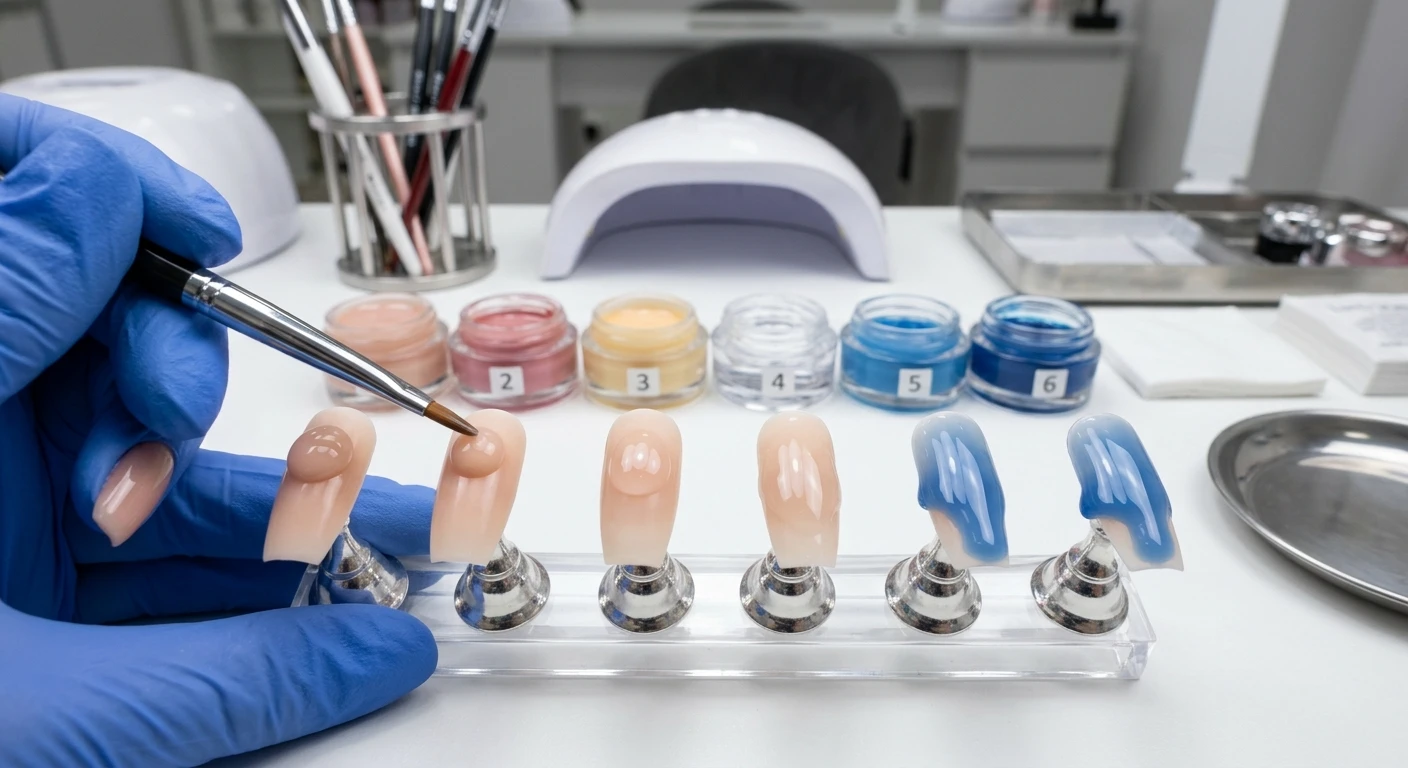
For buyers sourcing nail extension gel wholesale, viscosity should be included in the product specification rather than treated as a subjective preference. Establishing a clear reference helps your team evaluate samples consistently and communicate requirements to the manufacturer.
2. Evaluate Flexibility and Resistance to Cracking
Strength does not simply mean maximum hardness. A durable nail enhancement needs an appropriate balance between structural support and flexibility.
A formula that is too brittle may crack under mechanical stress, while a formula that is too soft may struggle to maintain the intended shape. This balance becomes particularly important for longer extensions, which can experience greater leverage during everyday use.
How to test flexibility and crack resistance
- Prepare several identical tips with the same application thickness and nail structure.
- Cure each sample according to the manufacturer’s instructions.
- Inspect the cured surfaces and edges for cracks, chips, bubbles, or other visible defects.
- Apply a controlled and repeatable bending or loading procedure appropriate for the test sample.
- Compare structural integrity and document any damage.
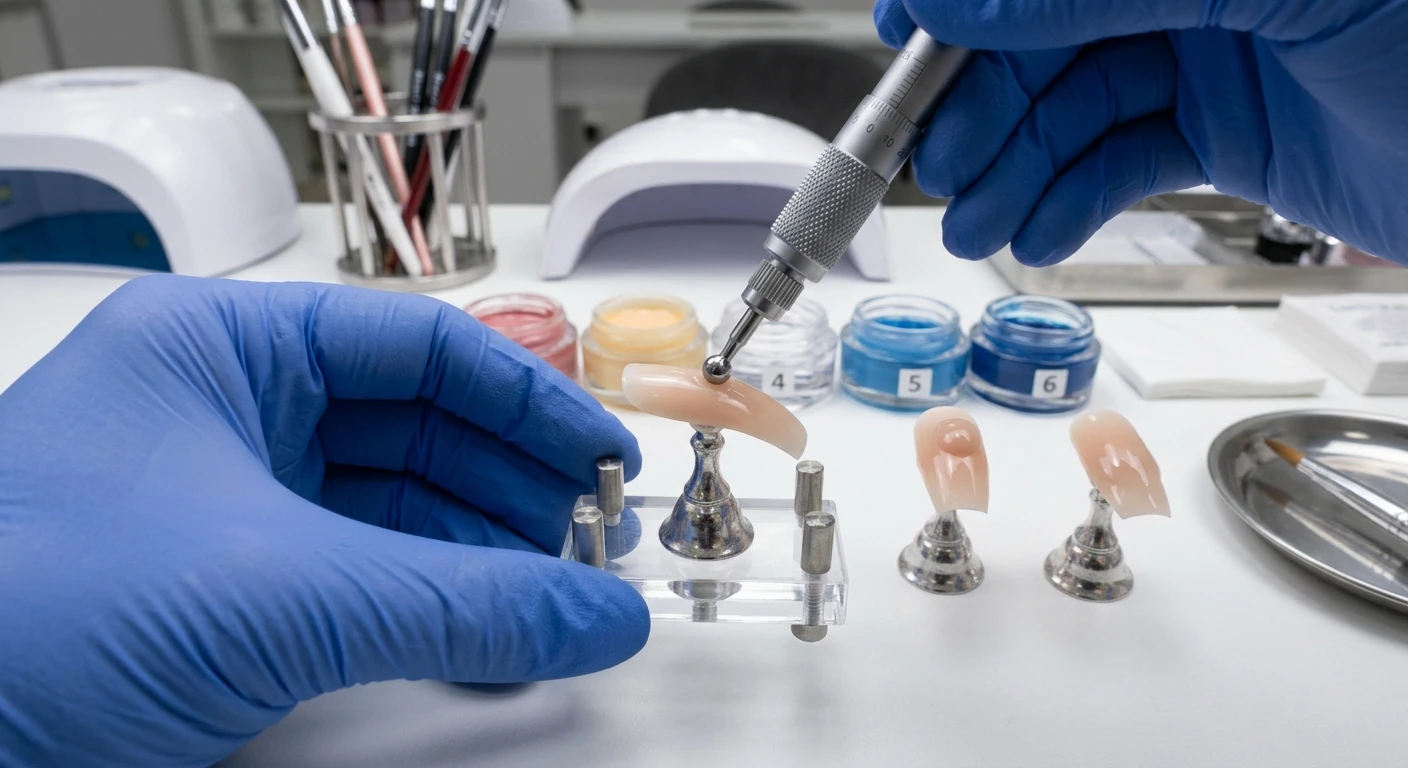
Do not compare products using different layer thicknesses, curing conditions, or sample shapes. These variables can affect the results and make the comparison unreliable.
For a more objective assessment, define an acceptance criterion before testing. For example, your purchasing team can specify that samples must show no visible cracks after a documented test procedure. This is an internal purchasing criterion, not a universal industry standard.
YouGel offers gel nail products for different professional applications. Buyers should evaluate the specific nail extension gel formula against their own requirements for toughness, flexibility, workability, and finished nail structure.


3. Test Self-Leveling and Shape Retention
Self-leveling describes a gel’s ability to settle into a smoother surface after application. Good self-leveling can reduce visible ridges and help technicians achieve a consistent finish with less corrective filing.
However, self-leveling is not the same as uncontrolled flow. A formula that spreads too quickly can reach the cuticle or sidewalls, increasing cleanup time and compromising application control.
| Evaluation factor | What to look for | Potential concern |
|---|---|---|
| Surface smoothness | A uniform surface with fewer visible ridges | Uneven areas requiring extensive filing |
| Flow control | Gel remains within the intended application area | Excessive spreading toward the cuticle |
| Apex retention | The intended structure remains stable | The apex flattens or shifts excessively |
| Filing requirements | Minimal corrective filing for the desired finish | Additional labor to correct the surface |
| Working time | Enough time to shape the enhancement | Gel moves too quickly for the intended technique |
How to compare self-leveling performance
- Apply equal amounts of each nail extension gel sample to comparable tips or forms.
- Use the same application technique and observe the surface over a fixed period.
- Record leveling time, surface smoothness, and shape retention.
- Nach der Produktanleitung aushärten lassen.
- Compare the finished surfaces and record the amount of corrective filing required.

For nail extension gel wholesale buyers, these observations help connect product performance with salon efficiency. A formula that suits the target technician’s workflow can support a more consistent service experience and a clearer product positioning strategy.
4. Check Adhesion and Wear Resistance
Even a strong builder gel can fail in practice if it does not adhere properly within the intended nail system. Poor adhesion may contribute to lifting, chipping, and premature service failure.
Adhesion testing must account for nail preparation, compatible base products, application thickness, curing equipment, and technique. These factors should remain consistent when comparing samples.
How to evaluate adhesion
- Follow the manufacturer’s recommended nail preparation and base coat procedure.
- Apply each sample using the same technique and specified thickness.
- Use a compatible lamp and follow the recommended curing instructions.
- Inspect the cured samples for visible defects.
- Monitor wear over a predefined evaluation period and record lifting, chipping, cracks, and changes in appearance.

For professional testing, use multiple samples and document the application conditions. A single successful application does not establish consistent performance across different users or production batches.
Important: Do not deliberately expose uncured gel to skin to test adhesion. FDA guidance on nail care products highlights the importance of following product directions and avoiding skin contact with potentially sensitizing nail ingredients. See the U.S. Food and Drug Administration’s Nail Care Products guidance.
When evaluating nail extension gel for resale, ask the supplier to clarify the recommended preparation process, compatible base products, curing conditions, and intended application method. This information helps your team develop repeatable testing procedures and more accurate product instructions.
5. Assess Curing Performance and Heat Sensation
Curing performance is a critical part of nail extension gel evaluation, particularly when the formula is designed for structural applications. Buyers must verify that the product cures adequately under its specified conditions and is compatible with the intended lamp.
Heat sensation during curing can affect salon comfort. However, a low-heat sensation alone does not prove that a product has cured completely or that it is safer under every application condition.
What to check during curing tests
- Lamp compatibility: Confirm the recommended lamp type and curing conditions.
- Layer thickness: Follow the specified application thickness rather than applying excessively thick layers.
- Curing procedure: Use the manufacturer’s stated curing time and instructions.
- Finished condition: Inspect the sample for visible defects and follow the supplier’s guidance for assessing adequate cure.
- Comfort considerations: Record heat-related feedback using an appropriate, controlled evaluation procedure.
Do not shorten curing time simply because the surface appears dry or the heat sensation is low. Surface appearance alone cannot establish complete curing.
For brands sourcing nail extension gel, obtain clear written curing instructions and confirm that the selected formula is suitable for the equipment and application method used by the target market.
6. Compare Batch Consistency and Supplier Reliability
A successful sample is only the first step. A reliable bulk supplier must also maintain product consistency, communicate specifications clearly, and provide appropriate documentation for the destination market.
Before approving a purchase order, evaluate both the product and the manufacturer’s ability to support repeat orders.
| Purchasing factor | Questions to ask the supplier | Why it matters |
|---|---|---|
| Formula consistency | How are product specifications and batch variations controlled? | Supports predictable repeat purchases |
| Quality control | What checks are performed during production and before shipment? | Helps identify quality issues before delivery |
| Product traceability | Can batches be identified and linked to production records? | Supports complaint investigation and follow-up |
| Aushärtungsanleitung | Are lamp compatibility and application instructions documented? | Helps customers use the product correctly |
| Packaging and labeling | Can packaging, labels, and product information be customized? | Supports private-label positioning |
| Regulatory documentation | Which documents are available for the intended market? | Helps buyers assess applicable compliance requirements |
| Production and lead times | What are the order quantities, lead times, and repeat-order arrangements? | Supports inventory and launch planning |
For private-label nail extension gel, confirm the approved formula, shade, packaging, label artwork, and product specifications in writing before mass production. Retain an approved reference sample and agree on a process for handling any deviations.
Check market-specific compliance requirements
Regulatory requirements vary by destination market and product formulation. Buyers should request documentation relevant to their actual sales markets rather than relying on a general claim that a product is compliant worldwide.
For example, the European Commission states that TPO, or trimethylbenzoyl diphenylphosphine oxide, has been prohibited in EU cosmetic products since September 1, 2025, under Commission Regulation (EU) 2025/877. The prohibition also applies to making affected products available commercially, including for professional use. See the European Commission’s TPO nail products Q&A.
This is particularly relevant when sourcing TPO-free nail extension gel for the EU market. Buyers should verify the full ingredient information and applicable documentation for each formula. A TPO-free claim by itself does not establish compliance with every cosmetic regulation.
Similarly, HEMA-free, vegan, and cruelty-free are distinct product claims. Verify the ingredients, supporting evidence, and labeling requirements applicable to each claim before approving private-label packaging.
YouGel provides OEM/ODM services and a broad gel nail product portfolio for international business customers. Buyers can discuss their target market, formulation preferences, packaging requirements, and documentation needs when evaluating suitable products.


7. Use a Standardized Nail Extension Gel Testing Checklist
A standardized checklist turns sample evaluation into a repeatable purchasing process. It helps buyers compare products under equivalent conditions instead of relying on price, appearance, or individual impressions.
Use the following checklist before approving a bulk order:
- Viscosity: The formula matches the target application method.
- Application control: The gel remains within the intended working area.
- Flexibilität: The cured structure meets the predefined performance criteria.
- Crack resistance: Samples pass the documented structural test.
- Selbstnivellierung: The surface reaches the required finish without excessive flow.
- Shape retention: The intended structure remains stable after curing.
- Haftung: Samples meet the agreed wear and lifting criteria.
- Curing: The product follows the specified lamp and curing procedure.
- Batch consistency: The supplier explains quality-control and traceability procedures.
- Packaging: The container, label, and product information meet the project requirements.
- Documentation: Applicable ingredient, safety, and regulatory documents are available for review.
- Commercial terms: MOQ, lead time, pricing, and repeat-order conditions are confirmed.
Recommended sample approval process
- Define the product brief. Specify the intended application, viscosity, flexibility, packaging, target market, and required claims.
- Request comparable samples. Obtain samples with clear product identification and application instructions.
- Standardize testing. Keep preparation, application thickness, lamp, curing conditions, and evaluation methods consistent.
- Record the results. Document performance, defects, application time, and any deviations from the acceptance criteria.
- Approve a reference sample. Retain the selected sample and document the agreed specifications.
- Confirm bulk production requirements. Review packaging artwork, documentation, production timelines, and quality-control expectations before placing the order.
This process is suitable for salon suppliers, distributors, importers, and private-label brands that need a consistent basis for comparing nail extension gel products and approving repeat purchases.
Häufig gestellte Fragen
1. How do you test nail extension gel strength before bulk orders?
Evaluate viscosity, flexibility, crack resistance, self-leveling, shape retention, adhesion, curing performance, and batch consistency. Use comparable samples, standardized application and curing conditions, and predefined acceptance criteria before approving mass production.
2. What makes a good nail extension gel for professional use?
A good formula combines suitable viscosity, reliable structural performance, controlled application, appropriate flexibility, and consistent curing under the specified conditions. The best choice depends on the intended extension length, application technique, lamp compatibility, and target customer.
3. Is harder nail extension gel always stronger?
No. Hardness alone does not establish overall performance. A useful evaluation also considers flexibility, crack resistance, adhesion, and the ability to maintain the intended nail structure under the conditions for which the product is designed.
4. How can buyers compare builder gel viscosity?
Apply equal amounts of each formula to comparable tips or forms using the same technique. Record spreading behavior, working time, shaping control, and shape retention. Compare the results against the requirements of your target technicians and market.
5. How long should nail extension gel be tested before a bulk purchase?
Set the evaluation period according to the product’s intended use and the performance claims being assessed. Include initial application and curing checks, then monitor wear over a predefined period appropriate to the test. There is no single duration that proves every formula’s long-term performance.
6. What should buyers ask a nail extension gel manufacturer before ordering wholesale?
Ask about formula specifications, viscosity options, sample availability, quality-control procedures, batch traceability, packaging customization, minimum order quantities, lead times, and market-specific documentation. Confirm the approved product specifications in writing before mass production.
7. Should buyers choose HEMA-free or TPO-free nail extension gel?
The choice depends on the target market, formulation requirements, and applicable regulations. HEMA-free and TPO-free describe different ingredient exclusions; neither claim alone proves that a product is universally safe or compliant. Verify the ingredient list and relevant documentation before purchase. For products intended for the EU market, pay particular attention to the TPO prohibition effective September 1, 2025.
Conclusion: Choose the Right Nail Extension Gel for Your Business
The right nail extension gel is not necessarily the hardest or cheapest formula. It is the formula that meets your target market’s requirements for application control, structural performance, adhesion, curing, and repeat-order consistency.
Before making a purchasing decision, compare shortlisted products against the same criteria. Then assess packaging options, supplier communication, available documentation, minimum order quantities, and the manufacturer’s ability to support your brand as demand grows.
For wholesalers and distributors, this process helps create a product range that meets professional expectations. For private-label brands, it also provides a clearer basis for defining product specifications, selecting suitable packaging, and planning future orders.
Why Work with YouGel?
YouGel ist eine Hersteller von Gel-Nagellack in China offering OEM/ODM services for international beauty brands, distributors, wholesalers, and professional nail product suppliers. With more than 10,000 gel shades and product options that include HEMA-free, TPO-free, vegan, and cruelty-free formulations, YouGel supports businesses looking to develop product lines for different customer preferences and market requirements.
Whether you are sourcing builder gel, nail extension gel, or complementary gel nail products, define your performance requirements before moving into mass production. Contact YouGel to discuss your target formula, explore private-label and OEM/ODM options, and request samples for evaluation before your next bulk order.